- Página de inicio /
- Libros /
- Computadoras y tecnología /
- Programming /
- Software Design, Testing & Engineering /
- Pruebas /
- DevOps Tools for Java Developers: Best Practi...
0 ratings


Nº de artículo:
154021995
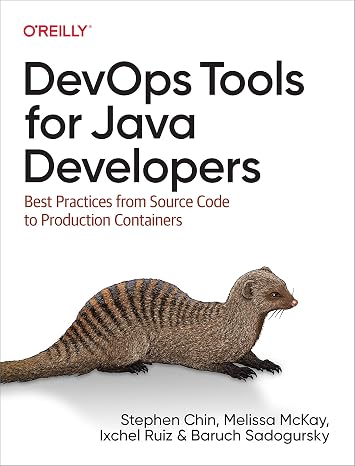
DevOps Tools for Java Developers: Best Practices from Source Code to Production Containers
88% de los encuestados recomiendan este producto a un amigo
Nº de artículo:
154021995
MXN 1385
Detalles del precio
Sin incluir gastos de envío y aduana ( Los gastos de envío y aduana se calcularán al finalizar la compra )
*Todos los artículos se importarán desde Estados Unidos
0 ratings
Escribe una reseña
En stock
 Importado de la tienda de EE.UU.
CANT.:
Haz tu pedido ahora y lo recibirás alrededor del Viernes, Octubre 09
Transacción Segura
Ubuy trabaja arduamente para proteger tu seguridad y privacidad. Nuestro avanzado sistema de seguridad de pagos garantiza la confidencialidad al cifrar tu información durante la transmisión mediante los protocolos AES (Estándares de Cifrado Avanzado) y SSL (Capa de Conexión Segura). Tus datos de pago están 100% seguros, ya que no compartimos tu información de pago con vendedores externos.
Nuestros socios logísticos principales


This practical guide helps you take advantage of microservices, serverless, and cloud native technologies using the latest DevOps techniques to simplify your build process and create hyperproductive teams.

Fast
Shipping

Devolución
gratuita*

Empaque seguro

Productos 100% originales

Cumplimiento PCI DSS

Certificado ISO 27001



Lo que destaca
Comprehensive Guide
Covers best practices for Java developers, detailing the complete DevOps lifecycle from source code management to production deployment, ensuring a smooth and efficient pipeline.
Focused on Containers
Emphasizes containerization, teaching Java developers how to leverage Docker and Kubernetes for scalability and portability, enhancing deployment efficiency and reducing runtime issues.
Expert Insights
Written by industry professionals, providing real-world experience and tips that simplify complex DevOps processes, empowering developers to apply these strategies immediately.
Detalles de producto
| Publisher | O'Reilly Media |
| Publication date | May 24, 2022 |
| Edition | 1st |
| Language | English |
| Print length | 341 pages |
| ISBN-10 | 1492084026 |
| ISBN-13 | 978-1492084020 |
| Item Weight | 1.23 pounds (560 grams) |
| Dimensions | 7 x 0.5 x 9 inches (17.8 x 1.3 x 22.9 cm) |
¿Quién debería comprarlo?

-
Java Developers
Java developers looking to enhance their DevOps practices will find valuable insights in this comprehensive guide.
-
DevOps Enthusiasts
Individuals interested in improving their skills in DevOps can apply the best practices highlighted in this book.
-
Team Leaders
Team leaders aiming to implement effective DevOps strategies in Java development teams will benefit from the practical approaches shared.

-
Beginners
Those new to programming or DevOps might find the concepts challenging without prior foundational knowledge.
DESCRIPCIÓN DEL PRODUCTO
DevOps Tools for Java Developers: Best Practices from Source Code to Production Containers
¿Tiene alguna pregunta? Chatea con nosotros
Preguntas y respuestas de los clientes
-
pregunta:
What are the best practices for using DevOps tools in Java development?
respuesta: Implementing best practices like Continuous Integration (CI) and Continuous Deployment (CD) is crucial for Java developers using DevOps tools. CI ensures that code changes are regularly tested and integrated, reducing integration issues down the line. CD automates the release process, allowing for rapid rollouts and quick feedback. Utilizing containerization tools such as Docker helps to streamline environments, ensuring consistency from development to production. For example, a Java team can integrate Jenkins for CI and use Docker for containerization to enhance deployment speed and reliability. -
pregunta:
How do DevOps tools enhance collaboration in Java development?
respuesta: DevOps tools foster collaboration through streamlined communication and shared tooling in the software development lifecycle. Tools like Slack, Jira, and Git enhance transparency and facilitate feedback loops between developers and operations teams. This synergy enables teams to respond to issues more effectively and prioritize tasks collaboratively. For instance, using Git for version control allows developers to work on different features simultaneously while maintaining a clear overview of progress, minimizing conflicts, and improving productivity. -
pregunta:
What role do containers play in Java development?
respuesta: Containers are pivotal in Java development as they ensure that applications run consistently across various environments. Tools like Docker encapsulate Java applications with their dependencies, enhancing portability and scalability. This allows developers to effectively replicate production environments on local machines, reducing the 'it works on my machine' syndrome. For instance, a Java web application can be packaged as a Docker image and deployed seamlessly across various cloud platforms, simplifying scaling and managing microservices architecture. -
pregunta:
Which DevOps tools are essential for Java developers?
respuesta: Key DevOps tools important for Java developers include Jenkins for CI/CD, Docker for containerization, Kubernetes for orchestration, and Git for version control. Jenkins automates the testing and deployment process, while Docker streamlines application deployment. Kubernetes manages containerized applications, ensuring scalability and high availability. Additionally, Git allows teams to collaborate efficiently on code. A typical setup might involve using Jenkins alongside Docker to automate testing and deployment, facilitating rapid releases with fewer errors. -
pregunta:
What is the significance of CI/CD in Java development?
respuesta: CI/CD is significant in Java development as it automates much of the software development process, leading to faster and more reliable software releases. Continuous Integration (CI) allows teams to integrate code changes frequently, while Continuous Deployment (CD) automates the release of code to production. This practice reduces manual effort and minimizes the risk of deployment errors. A Java application that employs CI/CD can release new features much more frequently, responding to user feedback quickly and enhancing overall product quality. -
pregunta:
How do I set up a CI/CD pipeline for a Java application?
respuesta: Setting up a CI/CD pipeline for a Java application involves several steps: First, version control your code using Git. Next, integrate Jenkins to automate builds and tests. You would then configure a testing framework like JUnit to run unit tests on your code. After successful tests, use Docker to containerize your Java application. Finally, implement a deployment strategy to automate the release process, ensuring that new code is deployed to production seamlessly. This setup allows for consistent deliveries and faster feedback cycles in your development process. -
pregunta:
What are the security considerations in DevOps for Java applications?
respuesta: Security in DevOps for Java applications requires integration of security measures throughout the development lifecycle, often referred to as DevSecOps. Implement practices such as regular code reviews, using security testing tools to identify vulnerabilities, and ensuring dependencies are up to date. Additionally, implementing access controls and monitoring in production reduces the risk of unauthorized access. For instance, integrating tools like SonarQube can help analyze your Java code for security flaws early in the development process, enhancing your application's resilience. -
pregunta:
How can I monitor my Java applications in production?
respuesta: Monitoring Java applications in production can be achieved through various tools that track performance metrics, logs, and errors. Tools like Prometheus for metrics gathering and Grafana for visualization help track application health and performance. Additionally, centralized logging solutions like ELK stack (Elasticsearch, Logstash, and Kibana) can be used to analyze logs in real-time. For example, if an application experiences latency, these monitoring tools can help identify bottlenecks quickly, allowing for timely fixes and maintaining user satisfaction. -
pregunta:
What languages do DevOps tools support aside from Java?
respuesta: While many DevOps tools focus heavily on Java, they also support a range of other programming languages such as Python, Ruby, JavaScript, and Go. Tools like Jenkins, Docker, and Kubernetes are designed to be language-agnostic and can manage applications written in various programming languages. For instance, a DevOps team can deploy a microservices architecture where some services are built in Java while others are implemented in Python without facing integration issues, thus promoting flexibility in technology choices. -
pregunta:
Where can I buy DevOps Tools For Java Developers Best Practices From Source Code To Production Containers?
respuesta: You can purchase 'DevOps Tools For Java Developers Best Practices From Source Code To Production Containers' on Ubuy in Mexico. Ubuy offers a wide range of educational resources and tools that are beneficial for Java developers looking to enhance their expertise in DevOps practices. Shopping on Ubuy guarantees a seamless experience with a variety of options that can meet your specific learning needs.
Testing Editorial Review
DevOps Tools for Java Developers: Best Practices from Source Code to Production Containers offers a comprehensive exploration of essential DevOps practices tailored for Java developers. The authors, all recognized Java Champions, draw from their extensive experience to deliver insightful content covering topics such as DevOps fundamentals, container best practices, and continuous deployment strategies. Readers appreciate the book for its clarity and depth, praising its ability to guide both novice and seasoned developers in understanding complex concepts while presenting practical tools for successful software delivery. The book’s standout feature is the in-depth chapter on deployment, which thoroughly examines key practices and technologies relevant to containers and Kubernetes.
Reseña y calificación de los clientes
1 calificaciones de los clientes
-
5 estrellas
100%
-
4 estrellas
0%
-
3 estrellas
0%
-
2 estrellas
0%
-
1 estrellas
0%
Reseñe este producto
Comparta su opinión con otros clientes
Ventajas
- Comprehensive coverage of DevOps principles for Java developers
- In-depth focus on container best practices
- Valuable insights from recognized Java Champions
- Approachable for both beginners and experienced developers
- Focus on practical tools and methodologies
Desventajas
- Some readers may prefer a deeper exploration of specific topics.
CONFIANZA EN LA PLATAFORMA Y PROTECCIÓN AL COMPRADOR

JK
Jasmin
Verified buyer
“Great products and very good service: very easy and very fast international delivery.”
9 September 2026 · via Trustpilot
AG
Anke
Verified buyer
“Wonderful online shopping experience, smooth transaction from the start. Payment method works conveniently and delivery is unexpectedly fast and reliable. You go the extra mile for service. What makes this even more amazing, you deliver to Namibia. I will remain a happy Ubuy customer and will increase my purchases for sure! Thank you!”
10 September 2026 · via Trustpilot
H
Hazel
Verified buyer
“Very easy to find the products what you need, and so fast delivery, that’s why I highly recommended to others costumers to used ubuy.”
10 September 2026 · via Trustpilot
O
Opaleye
Verified buyer
“I received exactly what I ordered I was skeptical about your site because that was my first time to order. But the order came timely and neatly packaged. I was not disappointed. Thank you.”
11 September 2026 · via Trustpilot
AC
Adele
Verified buyer
“Easy to find and order what you want on the website. Delivery is quick to the UK”
8 September 2026 · via Trustpilot
Pago seguro
Entrega mundial
Devoluciones fáciles
Productos originales
Historial de precios del producto
Información importante
- Limitaciones: Para los productos enviados al extranjero, ten en cuenta que cualquier garantía del fabricante puede no ser válida; las opciones de servicio del fabricante pueden no estar disponibles; los manuales del producto, las instrucciones y las advertencias de seguridad pueden no estar en los idiomas del país de destino; los productos (y los materiales que los acompañan) pueden no estar diseñados de acuerdo con las normas, especificaciones y requisitos de etiquetado del país de destino; y los productos pueden no ajustarse al voltaje del país de destino y a otras normas eléctricas (lo que requiere el uso de un adaptador o convertidor, si procede). El destinatario es responsable de asegurarse de que el producto puede ser importado legalmente al país de destino. Cuando hagas un pedido a Ubuy o a sus filiales, el destinatario es el importador registrado y debe cumplir todas las leyes y normativas del país de destino.
- No todos los productos que aparecen en Ubuy están a la venta, ya que Ubuy es un motor de búsqueda a nivel mundial. Los productos están sujetos a las normas de exportación/comercio.
MXN 1385
Haz tu pedido ahora y lo recibirás alrededor del Viernes, Octubre 09
Este producto no está restringido en mi país. (Por favor haga click en el link de arriba si este producto no está restringido en su país, para que nuestro equipo pueda verificarlo y permitir la compra).
CANT.:
Transacción Segura
Cumplimos con PCI DSS y contamos con certificación ISO 27001:2022, con pagos cifrados y protección total al comprador en cada pedido.
Nuestros socios logísticos principales
La entrega internacional más rápida
Características y beneficios
- Leverage microservices, serverless, and cloud native technologies.
- Simplify your build process with the latest DevOps techniques.
- Achieve hyperproductivity in your development teams.
- Includes comprehensive practices for Git, Maven, CircleCI, and Docker.
- Covers popular frameworks like Jakarta EE, Spring Boot, and more.
- Empowers you to manage and secure software dependencies effectively.
Garantía Ubuy
Disfruta de compras sin preocupaciones con productos 100% originales, seguridad de pago certificada por PCI DSS, protección de datos con certificación ISO 27001, la entrega internacional más rápida, devoluciones gratis y empaque seguro en cada pedido.*